We live in an age obsessed with self-improvement. Every new year, every Monday morning, and every motivational wave begins with a bold promise:
“This time, I will change.”
And yet, most habits collapse before they ever take root.
The gym routine fades after three weeks.
The reading plan dies on day ten.
Meditation happens only when we remember.
Motivation dissolves under the weight of everyday life.
So the real question isn’t how to build habits, but:
Why do habits fail — and what makes them last?
The truth is simple:
Change is not powered by willpower alone — it is powered by systems.
When the system is weak, even the strongest motivation won’t hold it.
This article breaks down the psychology behind failing habits and reveals the science-backed strategies to build routines that actually stick.
The Real Reason Habits Fail
Most people begin habits with excitement and force. But motivation works like a wave — it rises, peaks, and inevitably falls.
No human alive feels motivated every single day.
So when a habit depends on motivation alone…
it collapses the moment motivation disappears.
Common Reasons Habits Fail
- The goal is too big at the start
- The plan doesn’t match daily rhythm
- No reward reinforces the action
- No cue reminds the brain to perform it
- Identity doesn’t align with the habit
- Progress isn’t tracked or celebrated
A habit survives only when it becomes automatic.
To build that level of consistency, we need a structure stronger than motivation — and that begins with understanding the Habit Loop.
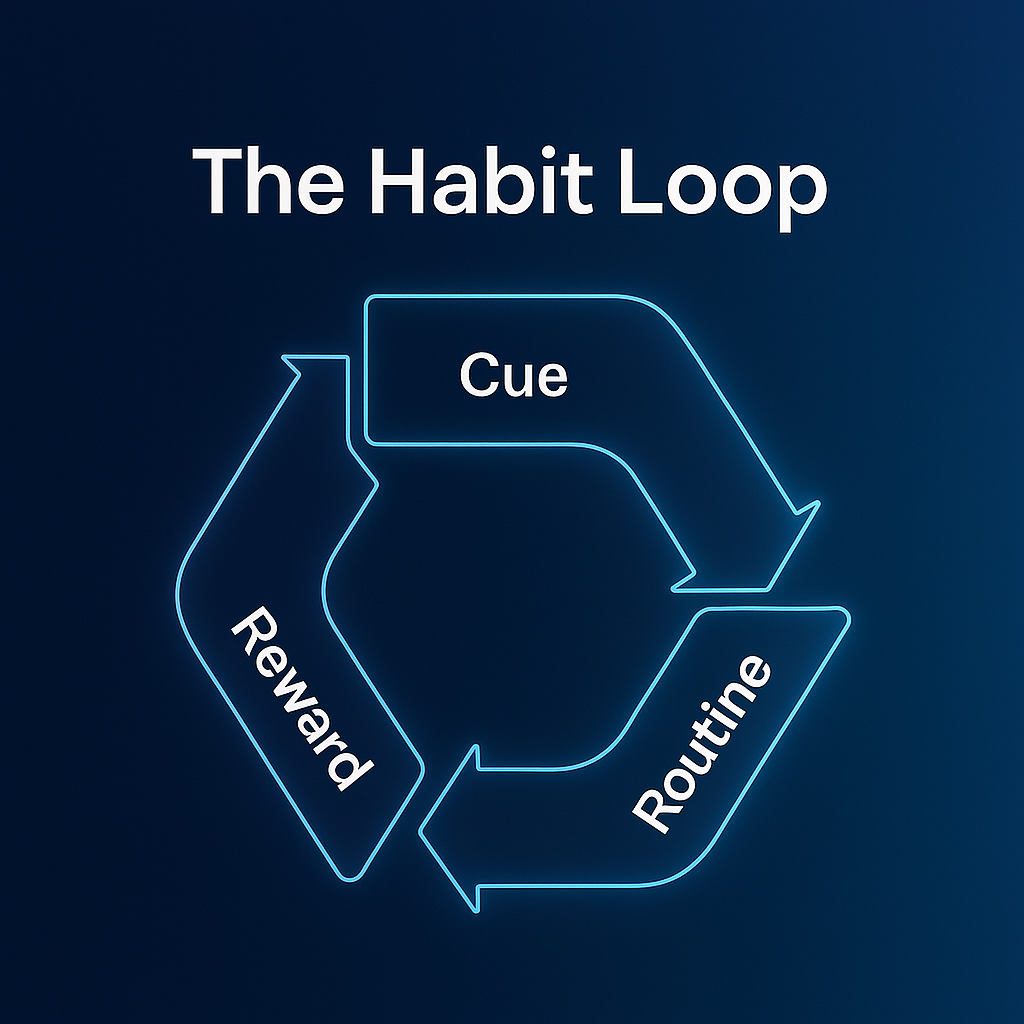
The Habit Loop: Cue → Routine → Reward
Every habit — good or bad — follows the same neurological sequence:
| Stage | Description |
|---|---|
| Cue | The trigger that initiates the behavior |
| Routine | The action or habit itself |
| Reward | What the brain gets from doing it |
Example:
Cue: feeling stressed →
Routine: eating sugar →
Reward: dopamine release (temporary relief)
The brain repeats what feels good.
So if we want habits to last, we must intentionally design:
- Clear cues
- Enjoyable rewards
Without these components, the habit has no psychological anchor.
Small Is Strong — The Power of Tiny Habits
Big promises often fail.
Small behaviors succeed.
Running 5 km daily is difficult.
Putting on running shoes is easy.
People underestimate the power of small steps, but consistency grows from simplicity.
A 1% improvement repeated every day becomes massive over time.
Examples: Tiny Habits vs. Big Goals
| Big Goal | Tiny Habit That Works |
|---|---|
| Meditate 20 minutes daily | Sit and breathe for 1 minute |
| Read 1 book per week | Read 2 pages a day |
| Exercise consistently | Do 5 push-ups |
| Reduce phone usage | 10-minute screen-free window |
Small actions repeated long enough become identity —
and identity makes habits permanent.
Environment Shapes Behavior More Than Willpower
“You don’t rise to the level of your goals.
You fall to the level of your systems.”
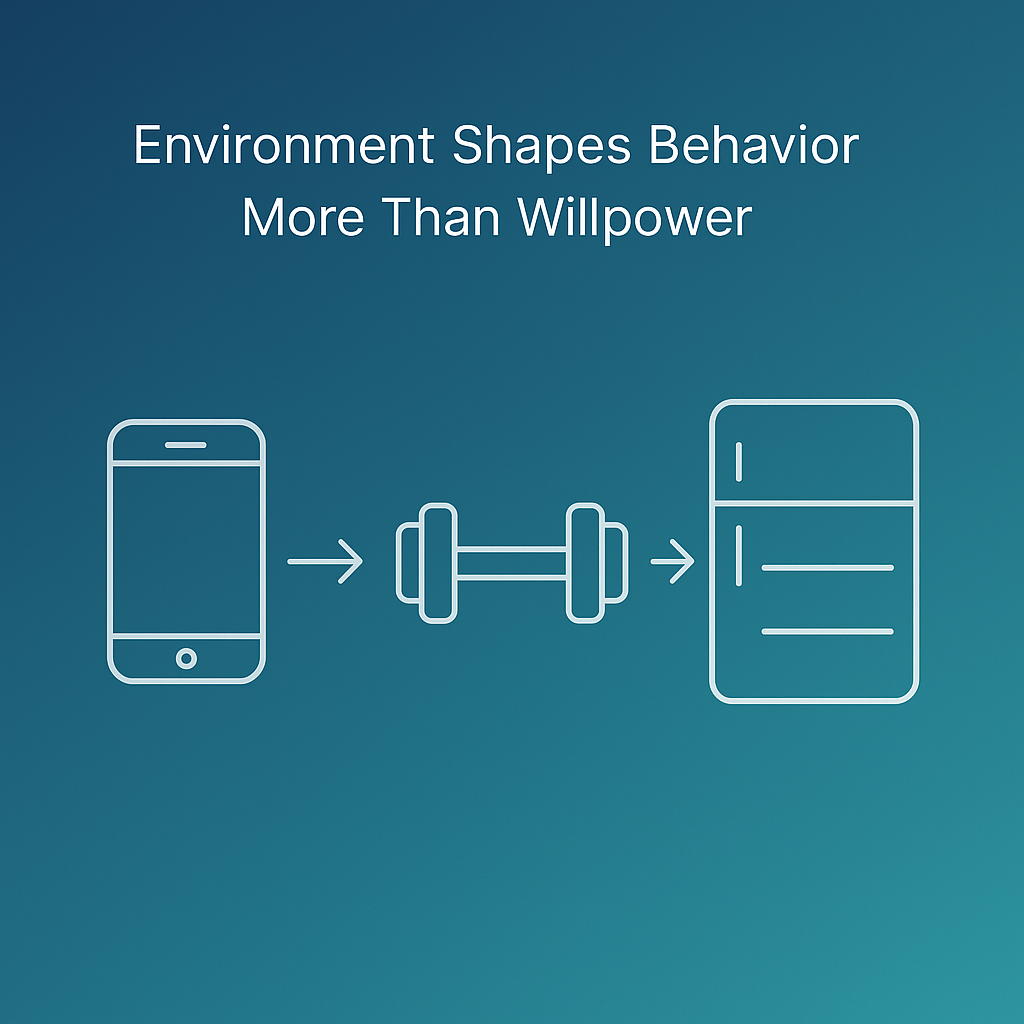
Your environment silently shapes your behavior.
- If your phone is beside your bed → scrolling is inevitable
- If junk food is visible → healthy eating becomes harder
- If workout clothes are ready → exercising becomes easier
To build lasting habits:
✔ Remove friction from desired actions
✔ Add friction to unwanted behaviors
✔ Shape surroundings to support change
Good habits should feel easy,
bad habits should feel inconvenient.
Habit Stacking — The Smartest Habit Strategy
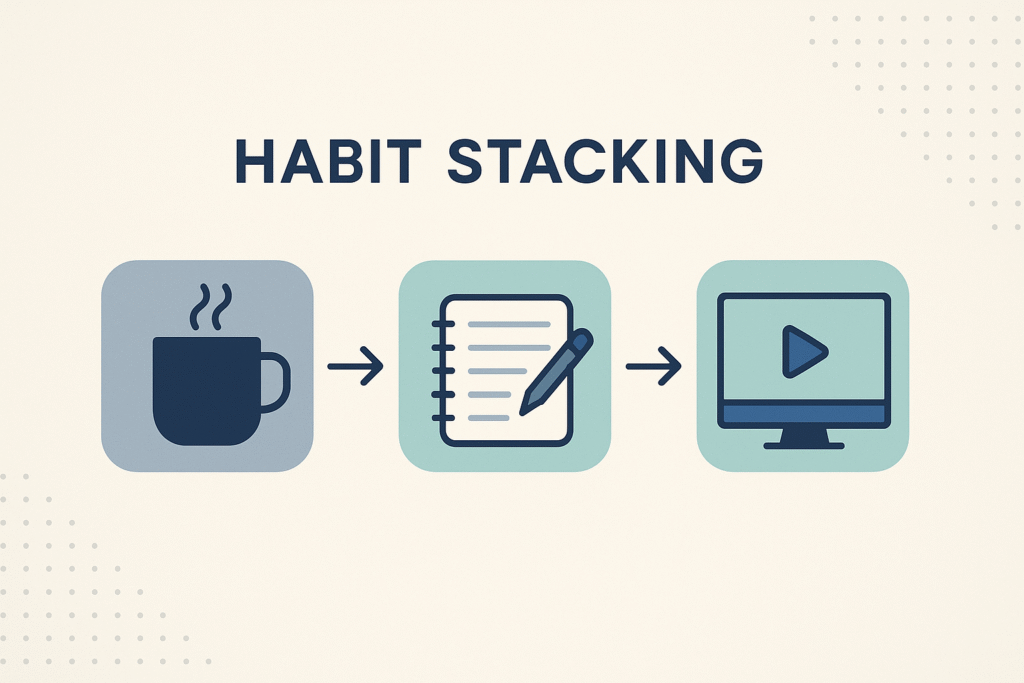
One of the most powerful habit-building techniques is Habit Stacking, introduced by BJ Fogg.
You attach a new habit to an existing one:
After I make coffee, I will journal for 5 minutes.
After brushing my teeth, I will stretch for 60 seconds.
After finishing work, I will take a 10-minute walk.
The existing behavior becomes the cue — no need for reminders.
The stronger the cue, the stronger the habit.
Identity: The Core of Lasting Change
Habits are not just behaviors.
They are self-definitions.
A person who smokes says: “I am a smoker.”
A person who runs daily says: “I am a runner.”
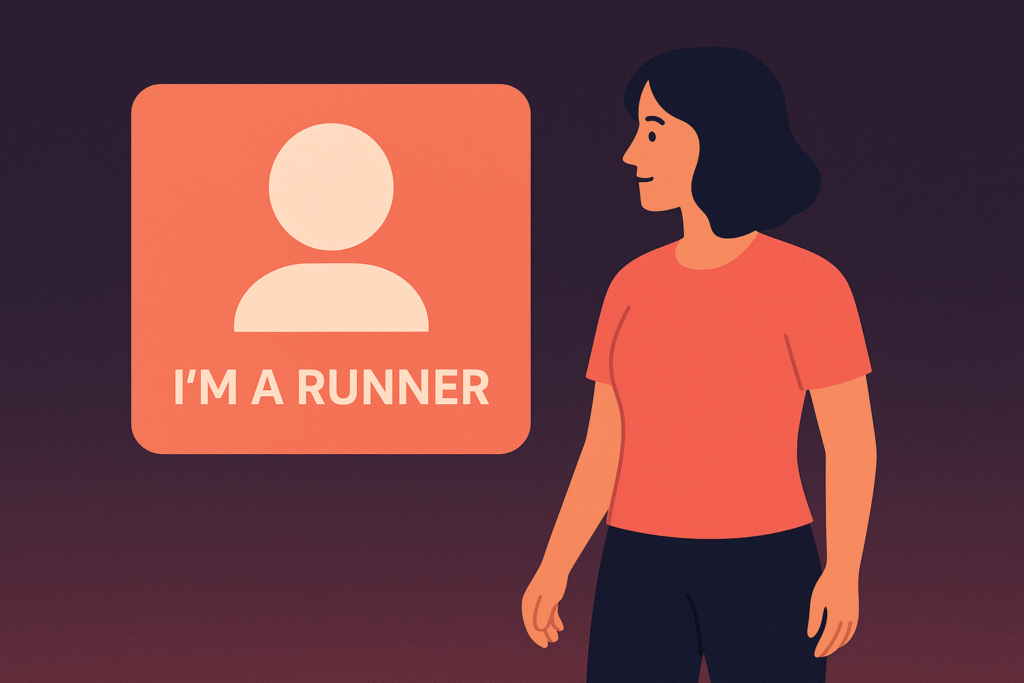
We don’t build habits to achieve identity —
we build identity through habits.
Two people quit smoking:
- One says: “I’m trying to quit.”
- The other says: “I’m not a smoker.”
Same action, different identity.
Identity-driven habits last longer because they fundamentally reshape how we see ourselves.
Instead of asking:
❌ “How do I build this habit?”
Ask:
✔ “Who do I want to become?”
Tracking, Reward & Reflection — The Habit Reinforcement Cycle
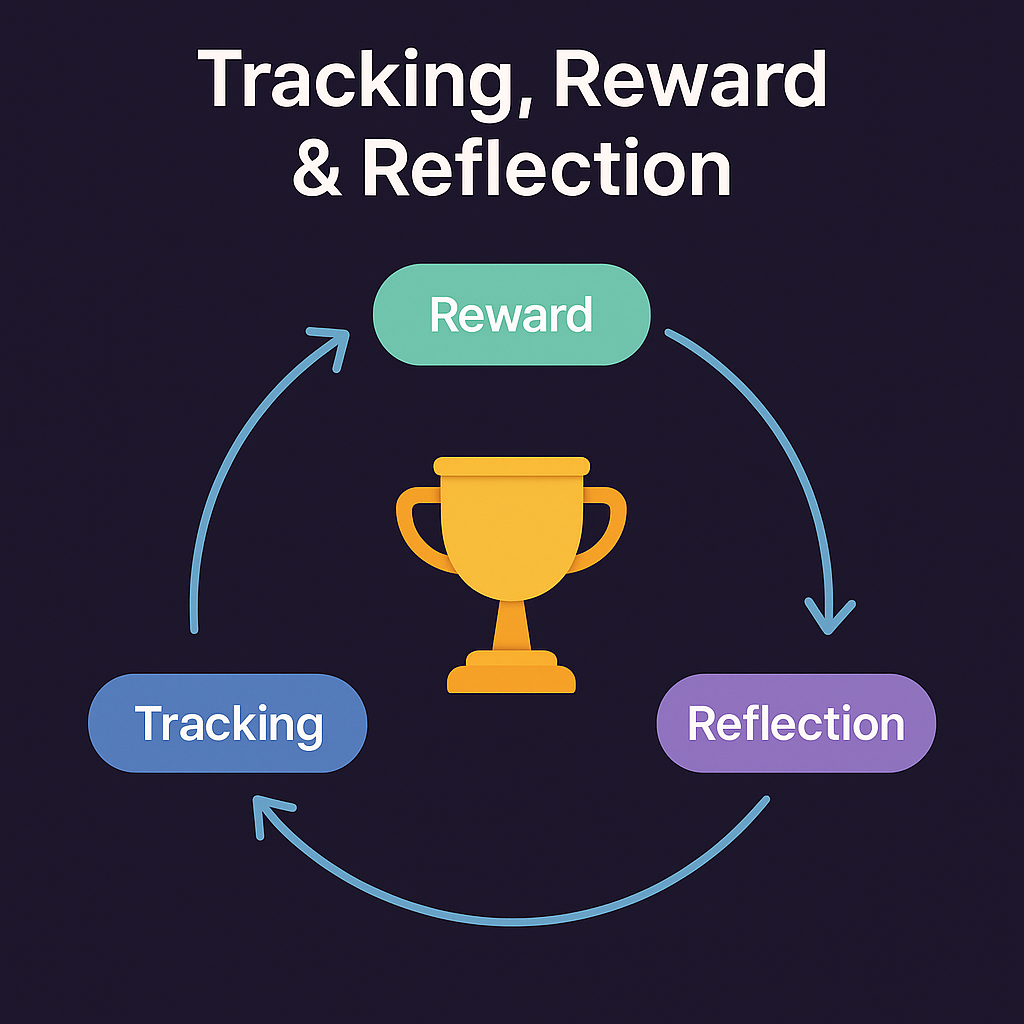
Progress that isn’t visible is progress forgotten.
Tracking habits — through Eunoia, apps, or journaling — creates psychological reinforcement.
When the brain sees progress, it experiences success.
Success encourages repetition.
Daily Reflection Questions:
- What worked today?
- What made the habit difficult?
- How did the habit change my energy or mood?
- What is one 1% improvement for tomorrow?
Growth is feedback.
Habit is accumulation.
How Eunoia Makes Habits Stick
Traditional trackers simply record your actions.
Eunoia understands them.
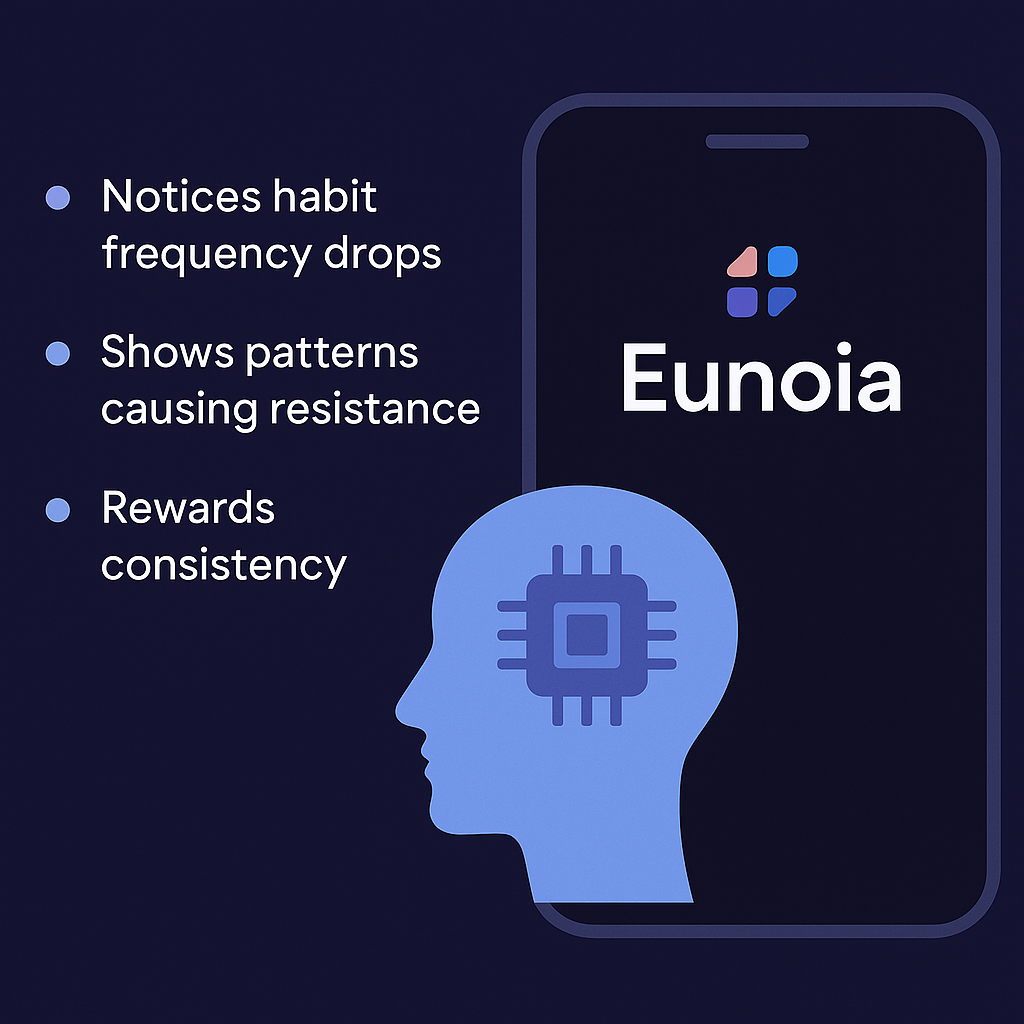
Eunoia:
- Detects when your habit frequency drops
- Shows patterns that cause resistance
- Identifies ideal timing for your routines
- Reflects mood and energy correlations
- Reinforces progress through AI-driven insights
With Eunoia, habit formation becomes:
- measurable
- intelligent
- guided
- adaptive
- sustainable
Motivation becomes optional.
Consistency becomes natural.
You’re no longer building habits alone —
you have a personal behavioral coach in your pocket.
Final Reflection
Habits don’t fail because we are weak.
They fail because the system is incomplete.
To build habits that last:
- Start small
- Design clear cues
- Reward progress
- Shape your environment
- Build identity
Consistency isn’t a force — it’s a flow.
A habit becomes permanent when it becomes part of who you are.
With Eunoia, your evolution is no longer guesswork —
it becomes a guided, intelligent, lifelong transformation.
Leave a Reply